Agree on a palette
A shared palette is one of the easiest ways to make different styles belong together. Choose a small group of main colors, then decide how much freedom everyone has with accents. Three or four shared colors are often enough. Artists can still introduce their own shades as long as the wall keeps a recognizable color rhythm.
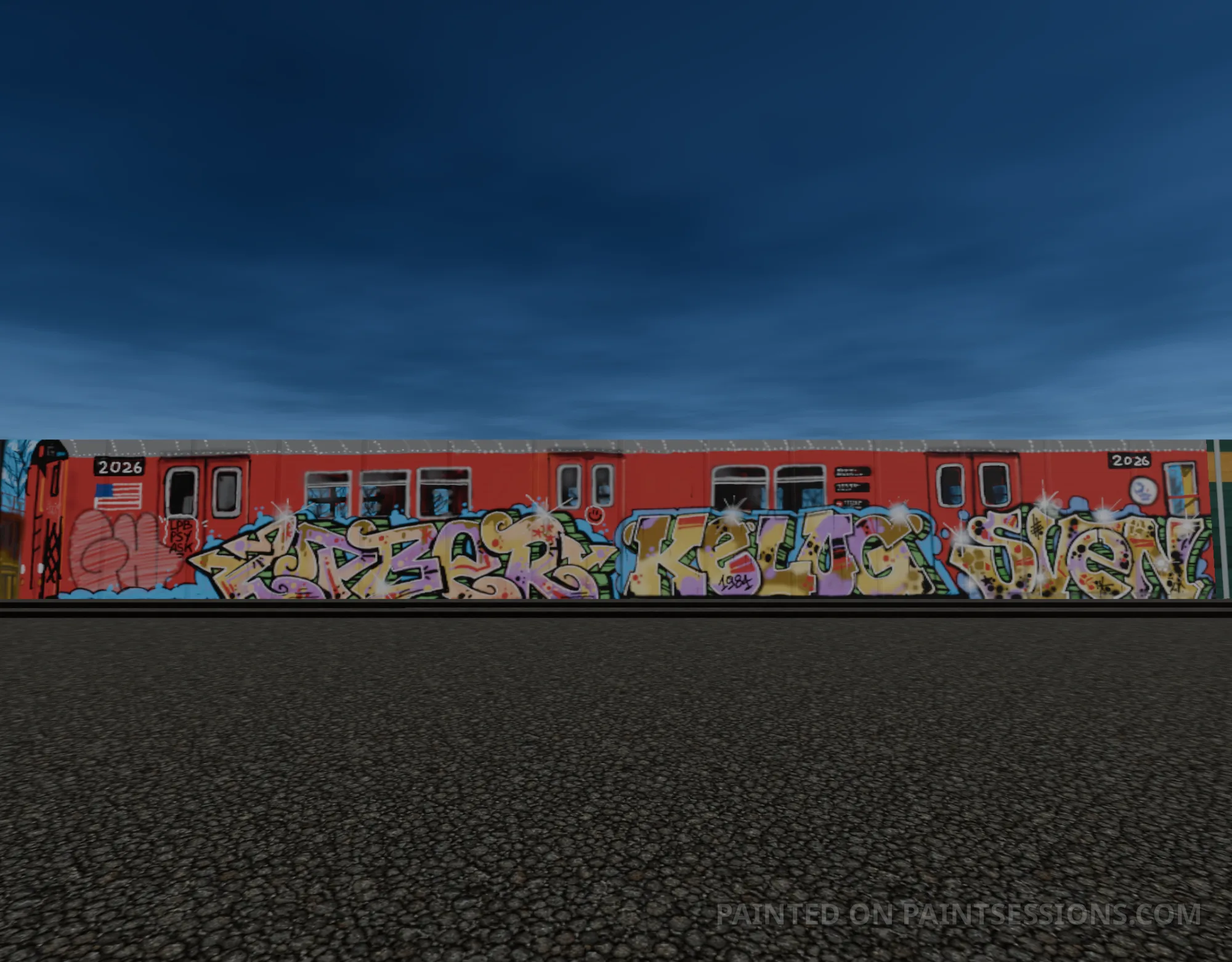
The Redbird wall is a good example. Warm cream and pale yellow carry through the pieces, while lilac, green, and light blue return as accents. The individual fills remain different, but the repeated colors, blue outlines, and dark shadows make the long train feel like one collaboration.
The Redbird background is painted as well. The red train body, windows, signs, and smaller details turn the surface itself into part of the collaboration instead of leaving neutral scenery behind the pieces. It is a good reason to decide who owns the background before the main work fills the available space.
Check the palette against the actual surface before everybody starts. Colors that look separate in a picker can merge at a distance, and a dark wall may need lighter outlines than the original sketch.
- Pick the main fill colors first.
- Agree on one or two outline and shadow colors.
- Reserve a bright accent for highlights and connections.
- Leave room for personal colors without losing the shared palette.
Divide the wall before painting
Do not divide the wall into equal strips unless every idea has the same shape. A wide letter piece, a tall character, and a compact throw-up need different amounts of space. Mark rough boundaries and compare proportions before anyone commits to detailed lines.
Think about what viewers will notice first. The center may suit the largest piece, but an end section can be perfect for a character that looks back into the composition. Doors, pillars, corners, and changes in the surface can also create natural boundaries.
Keep a little unused space between the first sketches. That buffer gives everyone room to adjust and leaves somewhere for connections, shadows, or background elements once the main pieces are established.
Decide what connects
A collab does not have to look like one enormous piece. Separate works can still feel intentional when they share colors, horizon lines, clouds, bubbles, stars, arrows, or other repeated details. Decide which elements cross between areas and which boundaries should remain clear.
Connected pieces need an owner for each transition. One artist can extend a background shape while the neighboring artist decides where it meets an outline. This avoids the common situation where both people wait, or both paint the same space differently.
If the pieces should remain separate, say so early. A clean gap or a simple frame can look much stronger than a last-minute effect added only because the wall feels empty.
Leave room for characters and backgrounds
Characters and backgrounds are easiest to plan before lettering fills the wall. Reserve their silhouettes at the start, even if they will be painted later. A rough block is enough to protect the space and show how the composition will balance.
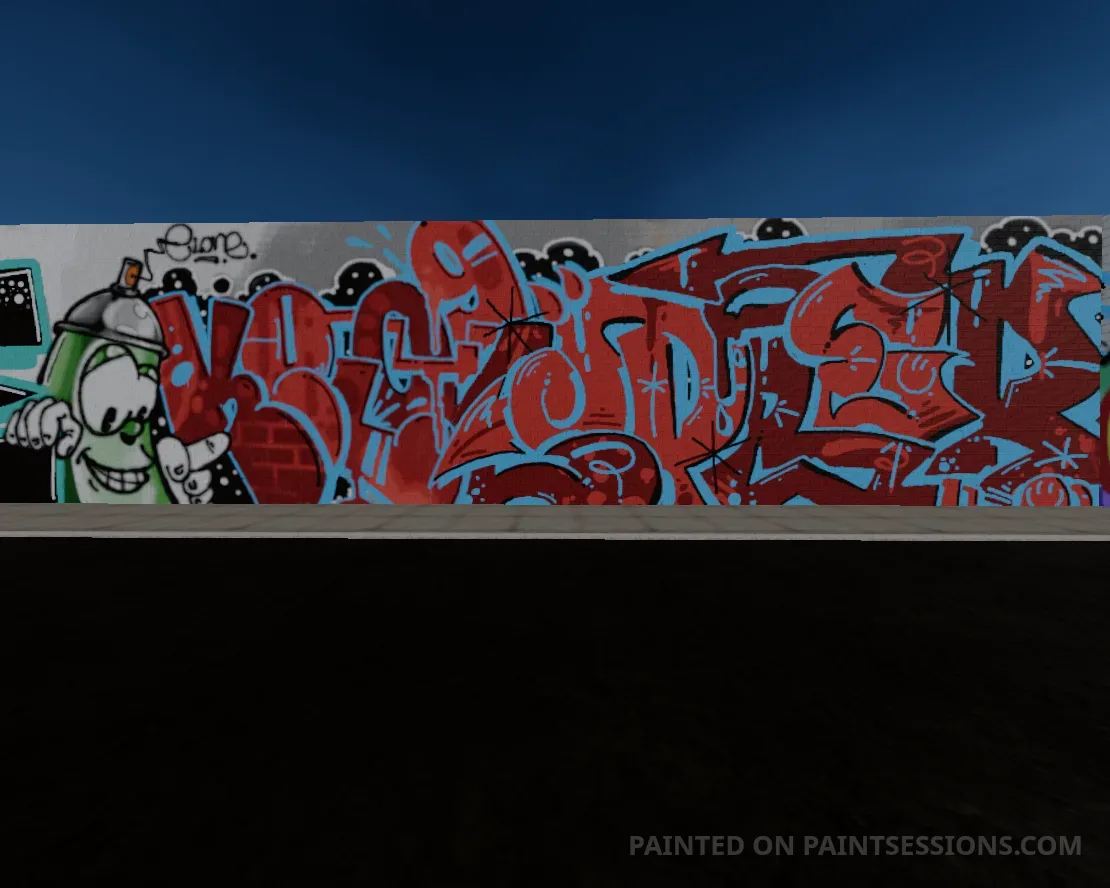
This wall uses its green paint-can character as an anchor at the edge of the red lettering. Cyan details repeat across the pieces, while the black background shapes help carry the composition from one section to the next. The character is not squeezed into a leftover corner. It has enough room to be readable and balance the lettering beside it.
Backgrounds should support the main work rather than compete with it. Start broad and simple, then add detail only where the wall needs movement or a transition between pieces.
Choose lightweight roles
Roles make coordination easier, but they do not need to be formal. Decide who begins the background, who watches the shared edges, who handles characters or connecting details, and who checks the wall from a distance. People can switch jobs as the session develops.
It also helps to choose one person to call the final cleanup. That does not mean they repaint other artists’ work. They simply point out unfinished gaps, accidental overlaps, or areas that need a final decision before the capture.
- Main pieces Each artist owns the placement, structure, and finish of their contribution.
- Shared background One or two people establish the broad shapes and carry them between sections.
- Connections Assign transitions so everyone knows who can cross a boundary.
- Final capture Choose who will frame, capture, publish, and add the collaboration credits.
Communicate while painting
Good communication during a collab is usually short and specific. Say when a sketch is still moving, ask before crossing into someone else’s area, and mention any palette change that affects the shared background. A quick message can prevent several minutes of repainting.
Pause occasionally and view the full wall together. Up close, every artist naturally concentrates on their own section. From farther away, it becomes easier to spot an uneven gap, a color that appears only once, or a background line that stops too suddenly.
Someone who is still learning the controls can use the draw graffiti online guide before the session, so the group can spend more time painting and less time explaining tools.
- Tell the group when your layout is still changing.
- Ask before painting across another artist’s outline.
- Share useful color choices in chat.
- Check the whole wall together before adding final details.
Credit and capture the finished wall
Before capturing, step back far enough to include the complete wall and check that every contribution is readable. Make one clean full-wall image first. Detail shots and angled views are useful extras, but they should not replace the image that shows how the collaboration works as a whole.
Choose the framing together when possible. Look for unfinished corners, obstructed pieces, distracting avatars, and lighting that hides dark colors. If something feels unbalanced in the capture, return to the wall and fix it instead of relying on the description to explain it.
When the artwork is published, add every participant as a collaborator. Credits make the history of the wall clear, connect the work to each artist’s profile, and let viewers discover everyone who contributed. Agree on who will publish before the session ends so the final capture and credits do not get forgotten.